
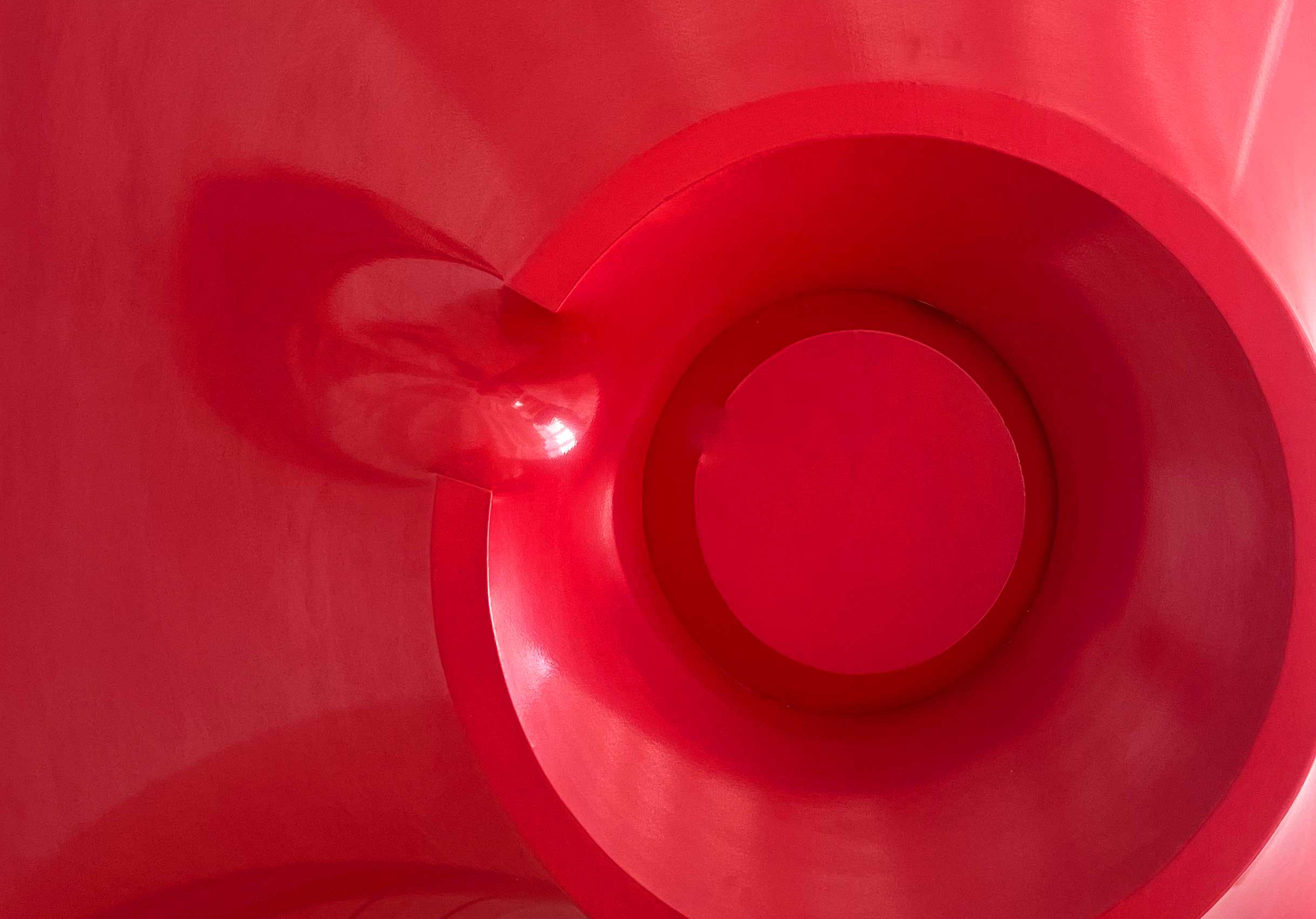
Agostino Bonalumi
(1935-2013)
Agostino Bonalumi was an Italian artist and is considered one of the most important representatives of abstract art in the 20th century.
A leading figure of the Italian avant-garde, Agostino Bonalumi explored the plasticity of the canvas in his object paintings and contributed to the emergence of irregularly shaped canvases in the postwar period. “My generation lived through the academy of the Arte Informel, when it was triumphant, and at a certain point that expressiveness which was purely appearance and not form, was not enough,” Bonalumi, who thrice exhibited in the Venice Biennale, once said. An ally of the German artist group Zero, Bonalumi—along with peers and friends Enrico Castellani and Piero Manzoni—was inspired by Lucio Fontana’s sliced canvases. He elaborated upon Fontana’s work, developing what he called “extroflexions”—intricate stretchers that molded his vinyl-coated monochromatic canvases and suggested a force pushing out from beneath. In the 1960s, Bonalumi expanded his materials to include metals, and he enlarged the scale of his work, ultimately creating installations.
Highest auction record £626.5k, Sotheby's, 2014
Collected by Centre Pompidou|Solomon R. Guggenheim Museum
Rosso
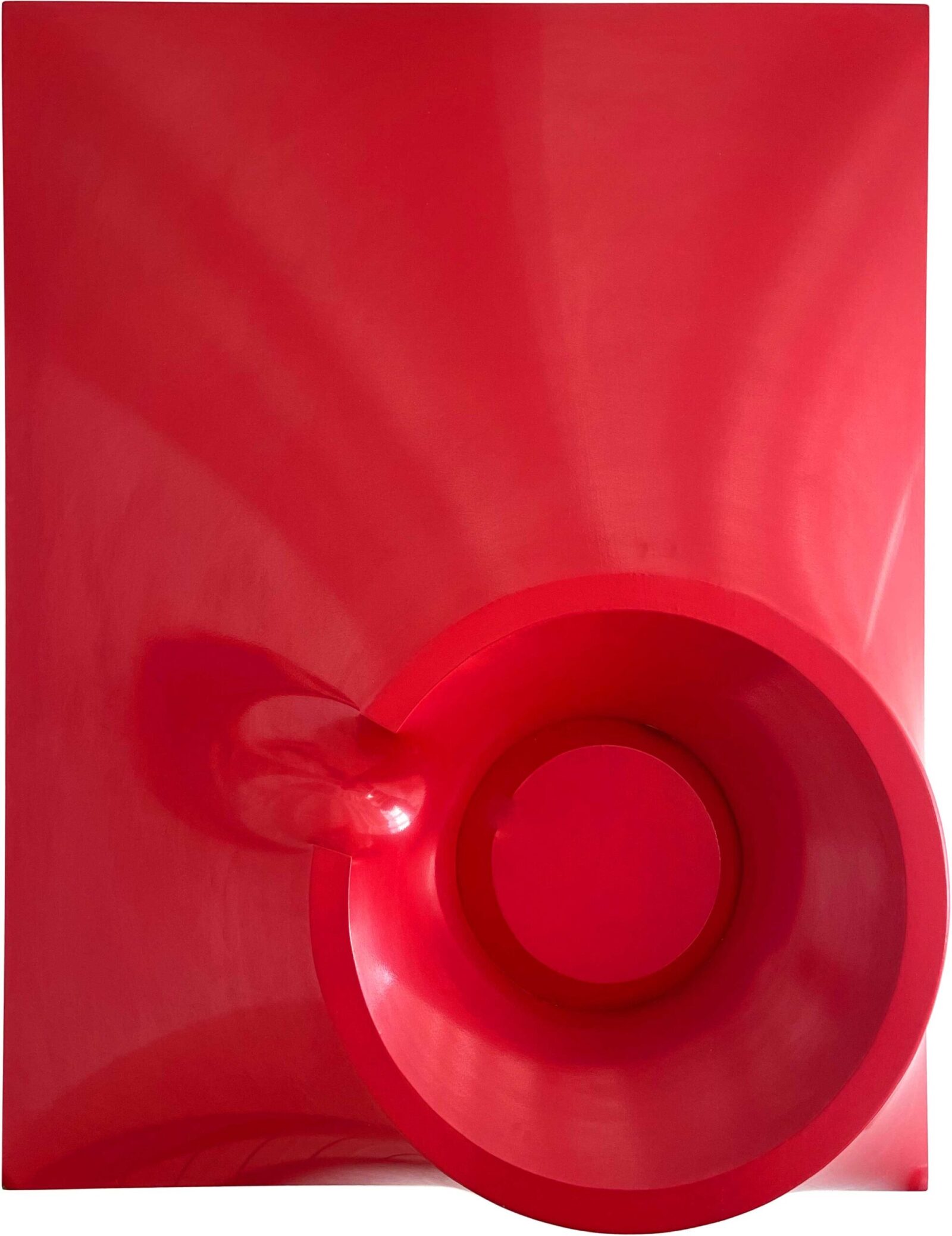
“It was in 1967, while I was in New York on a work trip, that I first encountered the plasticized material called ciré. I found it interesting for my work because of its elasticity and its bright, cool colors. This elasticity led me to explore new plastic solutions, and the construction technique I was using made it necessary and appropriate to revise my thinking, beyond the purely technical aspect. While the nature of a work of art is “given” and “appearance,” what the luminosity and coolness of the industrial color achieved was, in effect, to displace appearance from the pictorial pigmentation to the most rigorous extension, so that it now becomes, beyond the “quality” of the materials offered to our sensory perception, a considerably more significant part of the unfolding, the clarity, the minimalism of the construction. But, as is necessary if art is research, it was an experiment limited in time and in the number of works, among which, also due to their size (500 x 1800), I should mention cm), the 1968 Grande Nero, at the Museum am Ostwald in Dortmund."
(Excerpt from an interview with Agostino Bonalumi, Milan, 1990).