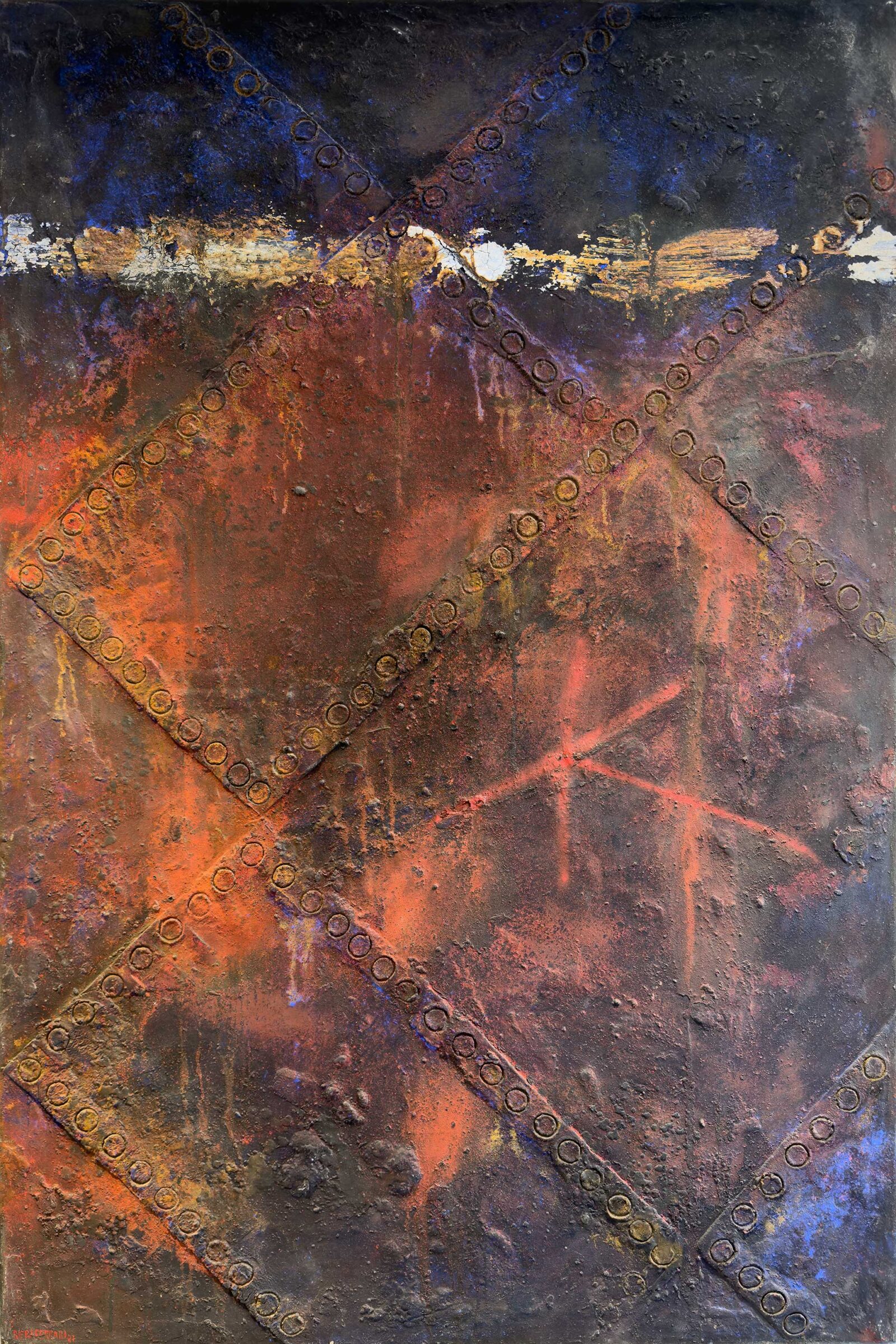
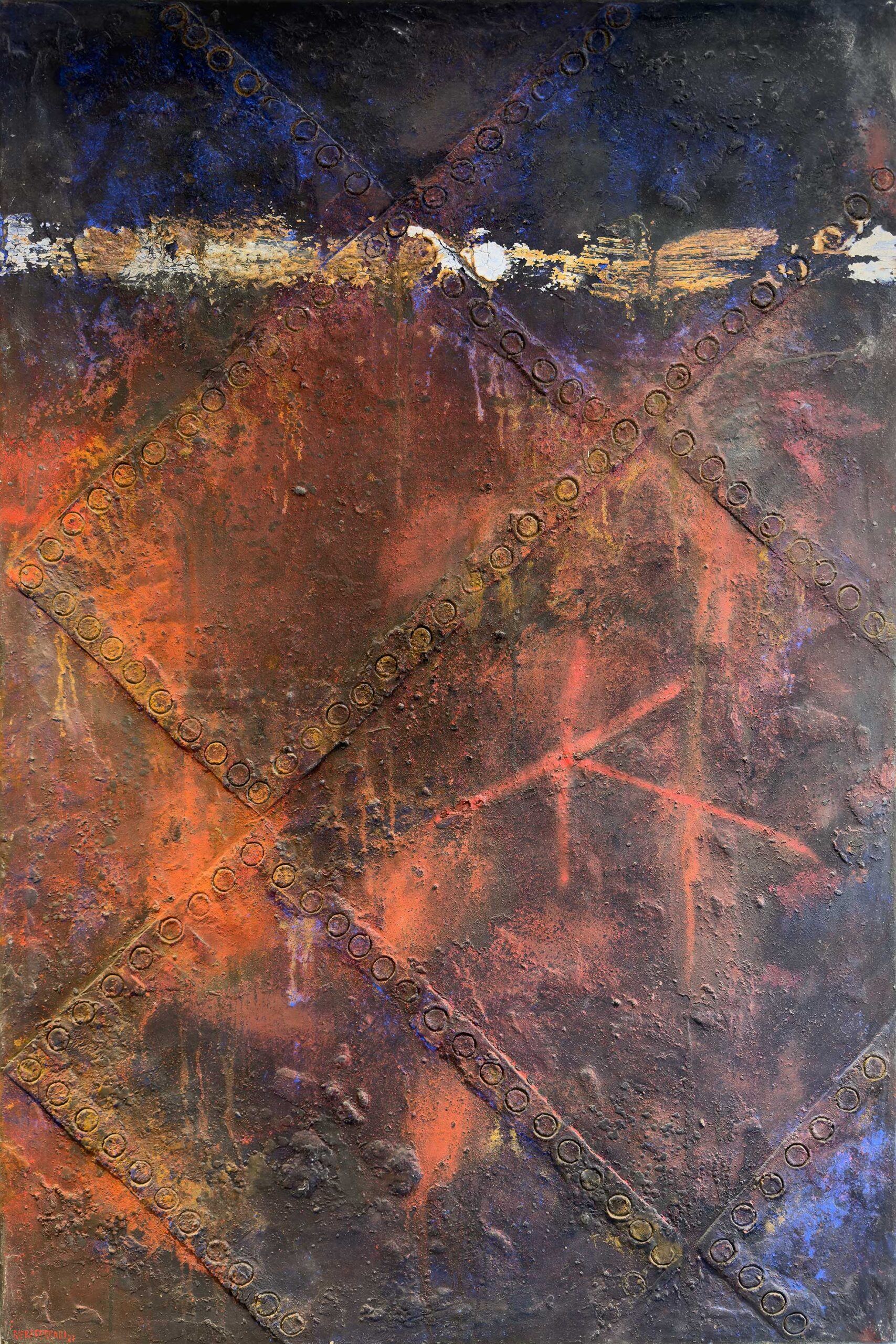
Joan Riera Ferrari
(1942-2017)
Joan Riera was born in Manacor and soon experienced what was probably the most traumatic event of his life: the death of his mother in 1950, shortly before his eighth birthday. He received a paint box and began creating his first drawings with it. Twelve years later, he moved to Barcelona to continue his studies and advance his career. He studied at the Royal Academy of Fine Arts of Sant Jordi, where he shared classes with Xim Torrens, Daniel Codorniu, and Castanyer.
In 1967, he returned to Mallorca and settled in Manacor, where he held his first exhibition before traveling to Helsinki to present his works. During these early years of his artistic career, he also taught at the vocational school of Manacor. As a provocative artist, he created an installation in the church of Manacor in 1969 by hanging a figure of Christ upside down on the cross, which caused strong protests throughout the town.
In the 1970s, he settled in Cala d’Or, where he mainly devoted himself to interior design, working for major hotel chains. During the same decade, he opened his own gallery, “Picarol,” to promote young artists, including Miquel Barceló Artigues from Felanitx. He traveled to several European cities, including Venice and Basel, where he launched the “Fasnacht” series, which was later exhibited at the Museum of Mallorca..
In the mid-1980s, he signed a contract with the Maneu Gallery. Joan Oliver “Maneu” introduced him to the most important international art fairs, where he consistently received critical acclaim (Vienna, Hamburg, Brussels, and Egypt). In Egypt, he created his black-and-white “Nubier” series.
In 1992/93, he began experimenting with different techniques in his newly established studio “L’Auba” in Manacor. He explored the concepts of beginnings and endings (life and death) while searching for his own visual language, which would accompany him for the rest of his life. He presented his “Tramuntana” series, the precursor to his best-known series, “Roques.”
In the mid-1990s, he exhibited his first expressive mixed-media landscape paintings in Los Angeles, using thick textures made from marble dust, sand, and oil paint. This exhibition brought him major success and had a lasting impact on his artistic career.
The year 1996 was the most difficult of his career. Within a few years, he lost several close family members and friends. This led him to create the exhibition “Som la mort” (“We Are Death”), whose centerpiece was an installation featuring a door painted with the names of the deceased and the phrase “Que no entri ningú … som la mort” (“No one shall enter … we are death”).
Around the turn of the century, he worked with the Sala Marimon Gallery, which once again exhibited his works throughout Europe until its closure in 2015. Nevertheless, he continued collaborating with the Maneu Gallery, which dedicated a retrospective exhibition to him in 2007.
Throughout his life, Juan Riera Ferrari experimented with various techniques and achieved outstanding results, as demonstrated by his copper engravings for the publisher Ernesto Rodríguez. He also worked as a sculptor and goldsmith. Riera Ferrari’s altruistic commitment, supporting numerous charitable organizations and fundraising initiatives, was publicly and privately recognized throughout his lifetime.
In 2009, he received the Ramon Llull Award for his life’s work. On February 6, 2017, while already suffering from illness, he stated in an interview with Diario de Mallorca: “I invented the drama of the Mallorcan rock.” Three months later, on May 4, Manacor suffered a tragic loss: Riera Ferrari passed away.